 Chinese
 Italian
 Spain
 French
 German
 Arabic
 Portugese

Why EBS Is the Default Lubricant and Mold Release Agent for ABS Processing
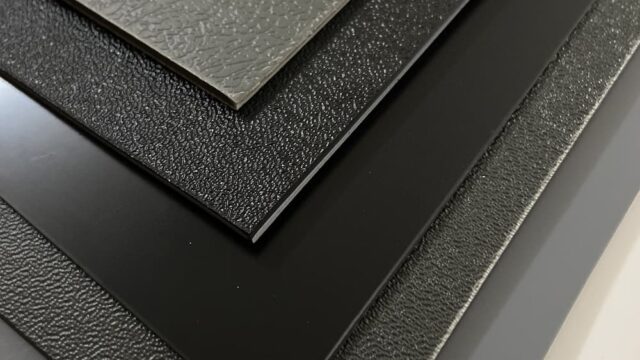
ABS is one of the most widely processed engineering thermoplastics globally, valued for its balance of rigidity, impact resistance, and surface finish quality. It is also a material that demands careful lubrication management during processing. Without adequate internal and external lubrication, ABS melt viscosity increases processing torque, complex mold geometries are difficult to fill completely, and finished parts resist clean ejection in ways that cause surface marking, dimensional inconsistency, and accelerated mold wear.
EBS (Ethylene Bis-Stearamide) is the most established plastic additive for addressing these challenges in ABS compounds. Its dual function as both internal and external lubricant, combined with reliable mold release performance, pigment dispersing capability, and secondary antistatic effect, makes it a multifunctional component that improves processing efficiency and finished part quality simultaneously from a single addition.
Internal and External Lubrication: How EBS Works in ABS
The lubrication value of EBS in ABS processing operates at two distinct levels, which is what distinguishes it from single-function lubricants that address only one interface.
As an internal lubricant, EBS reduces friction between polymer chains within the ABS melt, lowering melt viscosity and improving material flow through the barrel, runner system, and mold cavity. This flow improvement is practically significant in complex part geometries with thin walls, long flow paths, or intricate surface detail, where ABS without adequate lubrication may fill incompletely or require injection pressures that stress tooling and increase cycle time. Better melt flow also reduces shear heating from processing resistance, which protects the polymer from thermal degradation during extended production runs.
As an external lubricant and mold release agent, EBS creates a low-friction interface between the polymer melt and the metal surfaces of the processing equipment, including the barrel wall, screw, and mold cavity surfaces. This external lubrication layer prevents the ABS melt from adhering to tooling surfaces, enabling clean part ejection with reduced mechanical ejection force. For ABS parts with textured surfaces, tight tolerances, or complex undercuts where sticking during ejection would cause surface damage or dimensional distortion, this function directly affects finished part quality.
Pigment Dispersion and the Antistatic Contribution
EBS contributes two secondary functions in ABS formulations that add value beyond lubrication and release. Its dispersing capability improves the distribution of pigments, fillers, and other additives throughout the ABS matrix during compounding. Uniform pigment dispersion is the prerequisite for consistent color across production batches, and for compounds with high pigment loading or challenging pigment types, the wetting and dispersing action of amide-based additives like EBS reduces agglomeration and improves color strength efficiency.
The antistatic contribution of EBS in finished ABS parts is a secondary but commercially relevant benefit. The amide groups in the EBS molecular structure impart a mild antistatic effect to the part surface, reducing the tendency of finished components to attract dust during storage and use. For consumer electronics housings, appliance components, and automotive interior parts where surface cleanliness is a visible quality indicator, this antistatic contribution from the processing lubricant adds product value without additional formulation complexity.
Dosage, Thermal Stability, and Formulation Compatibility
Recommended EBS loading in ABS formulations falls between 0.5% and 1.5% by weight for standard lubrication and mold release applications, with commercial product guidance extending to 2.0 phr for demanding processability requirements. A patent-documented ABS resin composition uses approximately 1.1 phr of EBS per 100 parts of total resin, a loading that represents a practical midpoint balancing processing improvement against potential effects on mechanical properties.
Dosage discipline matters at the upper end of the range. While EBS improves melt flow, excessive loading can introduce plasticization effects that reduce heat deflection temperature or soften the mechanical profile of the finished ABS part. The recommended ranges are calibrated to optimize processing without compromising the end-use properties that make ABS the specified material in the first place.
EBS is frequently used in combination with metal soaps such as calcium stearate to achieve synergistic lubrication effects. The metal soap contributes primarily to external lubrication, while EBS provides internal lubrication and mold release, allowing formulators to tune the balance between the two functions independently rather than relying on a single additive to optimize both simultaneously.
Thermal stability is not a concern in standard ABS processing conditions. EBS remains functionally stable through the extrusion and injection molding temperatures typical of ABS compounds, and it is noted for lower yellowing tendency compared to some alternative lubricant chemistries, an advantage in light-colored and transparent ABS formulations where additive-induced discoloration is a quality failure.
Source EBS for ABS Applications from a Technically Capable Manufacturer
For ABS compounders, masterbatch producers, and plastic additive distributors sourcing EBS for lubrication, mold release, and dispersing applications, the purity and consistency of supply determines how reliably these processing and quality outcomes are achieved. Topwellgoal manufactures high-purity EBS and a complete range of fatty acid amide and amide-based additives to active content specifications exceeding 99.5%, with full COA documentation and technical application support for ABS and engineering plastic formulations.
Based on customer feedback, Topwellgoal’s EBS has demonstrated particularly strong compatibility and performance in ABS processing, with users consistently reporting improved melt flow, cleaner mold release, and better surface finish compared to previous supply sources. This real-world validation across different ABS grades and processing conditions reflects the consistency of our manufacturing quality rather than just the chemistry specification on the datasheet.
Contact Topwellgoal today to request EBS product specifications, samples, or formulation guidance for your ABS processing application.