 Chinese
 Italian
 Spain
 French
 German
 Arabic
 Portugese

The Chemistry Behind Every Thermal Receipt: Stearamide’s Role in Thermal Paper Production
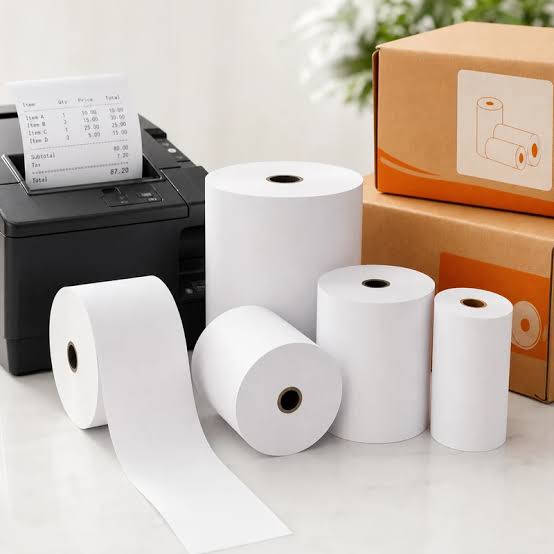
Every point-of-sale receipt, shipping label, and ticket printed on thermal paper relies on a precise chemical reaction triggered by heat. The leuco dye and developer in the coating must melt and combine at the exact moment the print head contacts the paper, and that reaction depends on sensitizers that lower the activation temperature and enable sharp, consistent image formation. Stearamide has been part of this chemistry since the earliest commercial thermal paper formulations, and it remains in use today for reasons that go beyond its functional history.
Understanding stearamide’s role in thermal paper production, what it does, where it fits in modern formulations, and how its secondary functions add value beyond sensitization, gives coating formulators and plastic additive suppliers a clearer basis for specification decisions in this technically demanding application.
Stearamide as a Thermal Sensitizer: The Foundational Function
The thermal imaging mechanism in thermal paper depends on the dye and developer components transitioning from solid to liquid state rapidly and at a controlled temperature. Sensitizers enable this by lowering the melting point of the coating system, allowing the color-forming reaction to occur at lower print head temperatures and with greater consistency across varying environmental conditions.
Stearamide, a saturated fatty acid amide with a melting point in the range of 107°C to 109°C, performs this function by melting at temperatures compatible with standard thermal print head operating conditions. As it melts, it acts as a solvent or carrier medium that promotes intimate mixing of the leuco dye and developer, facilitating the chemical reaction that produces the visible image. This is why stearamide was among the first sensitizers adopted in commercial thermal paper coating formulations. Its melting behavior aligns well with the temperature window thermal printing operates in, and it is straightforward to incorporate into aqueous coating dispersions.
Patent literature and supplier documentation consistently classify stearamide as a sensitizer for heat-sensitive recording materials, confirming its established position in the chemistry of thermal paper coatings across decades of commercial use.
The Modern Role: Supplementary Sensitizer in Cost-Optimized Formulations
Contemporary thermal paper formulations have evolved beyond single-sensitizer systems. More specialized sensitizer chemistries, including benzyl p-benzyloxybenzoate and related compounds, have been developed to deliver higher thermal sensitivity, better image stability, and improved resistance to environmental factors like moisture, oils, and UV exposure. These advanced sensitizers often serve as the primary sensitizing component in premium thermal paper grades.
Stearamide in this context functions as a supplementary sensitizer: added alongside the primary sensitizer to reduce overall formulation cost while maintaining acceptable thermal response. The cost efficiency of amide-based additives like stearamide relative to specialty sensitizers makes this combination approach economically practical for standard-grade thermal paper applications where peak thermal sensitivity and image archivability are not the primary specifications.
Formulators using stearamide in a supplementary sensitizer role should note that some patent literature identifies limitations in thermal image stability when non-methylolated fatty acid amides are used at higher concentrations, compared to more specialized alternatives. This performance trade-off reinforces stearamide’s appropriate positioning as a cost-reducing supplementary component rather than the sole sensitizer in applications with demanding image stability requirements.
Anti-Sticking and Lubrication: The Secondary Functions That Protect Print Quality
Beyond sensitization, stearamide contributes measurable value in thermal paper formulations through its lubricating properties. Print head sticking, where the thermal paper coating adheres to the ceramic or metal print head surface during printing, is a practical production problem that causes paper jams, uneven print density, and accelerated print head wear. Stearamide’s surface lubricity reduces the adhesion between the coating and the print head, improving anti-sticking performance and extending operational intervals between print head cleaning cycles.
In protective overcoat formulations, stearamide is used at concentrations of 5% to 50% by mass of the relevant coating layer specifically for this anti-sticking function. At these levels, it acts as a wax-like surface modifier that maintains a low-friction interface between the paper surface and mechanical handling components throughout the printing and dispensing process.
This dual contribution, sensitization in the active coating layer and lubrication in the protective overcoat, makes stearamide a versatile plastic additive component in thermal paper coating systems, contributing to both imaging performance and mechanical reliability from a single chemical input.
Purity and Consistency in Thermal Paper Applications
Coating formulations for thermal paper are applied at precise layer weights and must disperse uniformly across the paper substrate. Impurities in the fatty acid amide sensitizer component introduce variability in melting behavior, coating dispersibility, and surface lubrication consistency, any of which can affect print quality or coating uniformity across production runs. High-purity stearamide with consistent particle size and well-characterized melting point delivers more predictable coating performance than lower-grade alternatives, making sourcing quality a directly relevant production variable rather than a specification formality.
Topwellgoal manufactures high-purity stearamide and a complete range of amide-based additives to active content specifications exceeding 99.5%, with full COA documentation covering melting point, acid value, moisture content, and color. Our technical team supports customers in matching grade and physical form to specific coating formulation requirements.
Contact Topwellgoal today to request stearamide product specifications, samples, or formulation guidance for thermal paper coating applications.