 Chinese
 Italian
 Spain
 French
 German
 Arabic
 Portugese

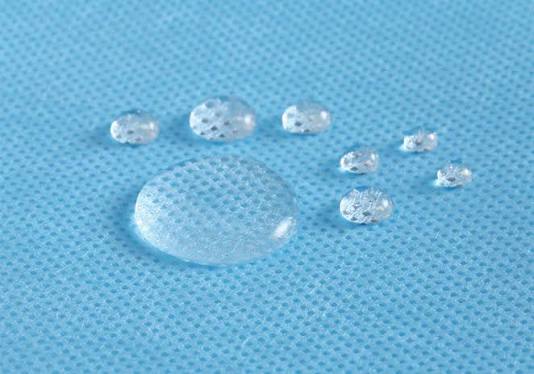
Soft Fabric or Liquid Barrier: How Amide Chemistry Decides Non-Woven Fiber Performance
The performance difference between a non-woven fabric that feels uncomfortable against skin and one that meets the tactile standards of premium hygiene or medical products is not primarily a fiber selection decision. It is a formulation decision made at the additive level, before the fiber is ever spun. For PP fiber producers, masterbatch compounders, and non-woven fiber converters, amide-based additives are the chemistry that separates a fabric that passes specification from one that consumers actually want to use.
Erucamide also affects the internal fiber structure in a way that supports softness without sacrificing mechanical integrity. Research has shown that the additive facilitates polymer chain sliding under stress, making the fiber more ductile and able to stretch further before breaking. This means erucamide improves the tactile experience of the fabric without weakening its tensile performance, a formulation balance that is critical in spunbond nonwovens used in diaper topsheets, wipes, and medical gowns where both comfort and strength are specifications that must be met simultaneously.
Blended formulations offer additional tuning capability. A documented approach using 25% to 40% erucamide combined with 60% to 75% stearamide produces what patent literature describes as distinct tactile and ductile softness in melt-spun PP fiber fabrics, providing formulators with a combined amide system that balances the slip performance of erucamide with the surface modification characteristics of stearamide.
Behenamide: The Efficient Choice for Liquid Barrier Applications
Where the performance requirement shifts from softness to hydrophobicity and liquid repellency, the amide chemistry selection changes accordingly. Behenamide, a saturated amide, modifies fiber surface energy in a way that unsaturated amides like erucamide and EBO cannot replicate at equivalent loading levels.
Industrial pilot-line data from spunbond non-woven fiber production directly compares these amide types on Liquid Strike Through Time (LSTST), the standard measure of liquid barrier performance. Behenamide improved LSTST at concentrations as low as 2,000 ppm. EBO required 4,000 to 9,000 ppm to show comparable benefit. The difference traces to molecular structure: behenamide’s saturated chain and spatial arrangement modify the fiber surface in a way that enhances liquid repellency more efficiently than the unsaturated alternatives.
This efficiency advantage makes behenamide the technically correct choice for barrier layer applications in hygiene products, where hydrophobicity of the outer cover or back-sheet layer is a functional requirement, and where additive loading must be minimized to avoid interfering with other properties of the fabric system.
The selection logic across these two applications is clear: erucamide for softness and slip agent performance in fabrics designed for skin contact comfort, behenamide for liquid barrier enhancement in layers where repellency is the functional priority. Many multi-layer nonwoven constructions benefit from both, with each chemistry applied in the appropriate layer for its specific function.
Dosage, Thermal Stability, and Practical Formulation Considerations
Both fatty acid amides are melt-blended into the PP fiber resin before spinning, typically via masterbatch to ensure uniform distribution at the low addition rates these applications require. Erucamide’s thermal stability makes it suitable for standard PP spunbond processing temperatures, though at the upper end of typical spinning temperature ranges, grade selection should account for volatility to avoid plate-out on spinneret faces and die surfaces.
Dosage calibration matters at both ends. Below the effective threshold, softness or barrier performance will be insufficient. Above it, excessive bloom can interfere with thermal bonding during calendering, where the lubricating surface layer reduces the heat transfer needed for fiber-to-fiber melt bonding and weakens the finished fabric’s tensile properties. The recommended working range for erucamide in spunbond PP is 100 to 2,500 ppm, with specific loading determined by target COF, fabric weight, and the downstream bonding process in use.
Source Non-Woven Fiber Additives from a Technically Capable Manufacturer
For non-woven fiber producers, masterbatch manufacturers, and amide-based additives distributors worldwide, the consistency of erucamide and behenamide supply quality determines how reliably these performance outcomes are reproduced across production runs. Topwellgoal manufactures high-purity erucamide, behenamide, stearamide, and the complete range of fatty acid amides to active content specifications exceeding 99.5%, with full COA documentation and technical application support for nonwoven fiber formulation development.
Contact Topwellgoal today to request product specifications, samples, or formulation guidance for amide additive selection in your non-woven fiber application.