 Chinese
 Italian
 Spain
Spain French
 German
 Arabic
 Portugese
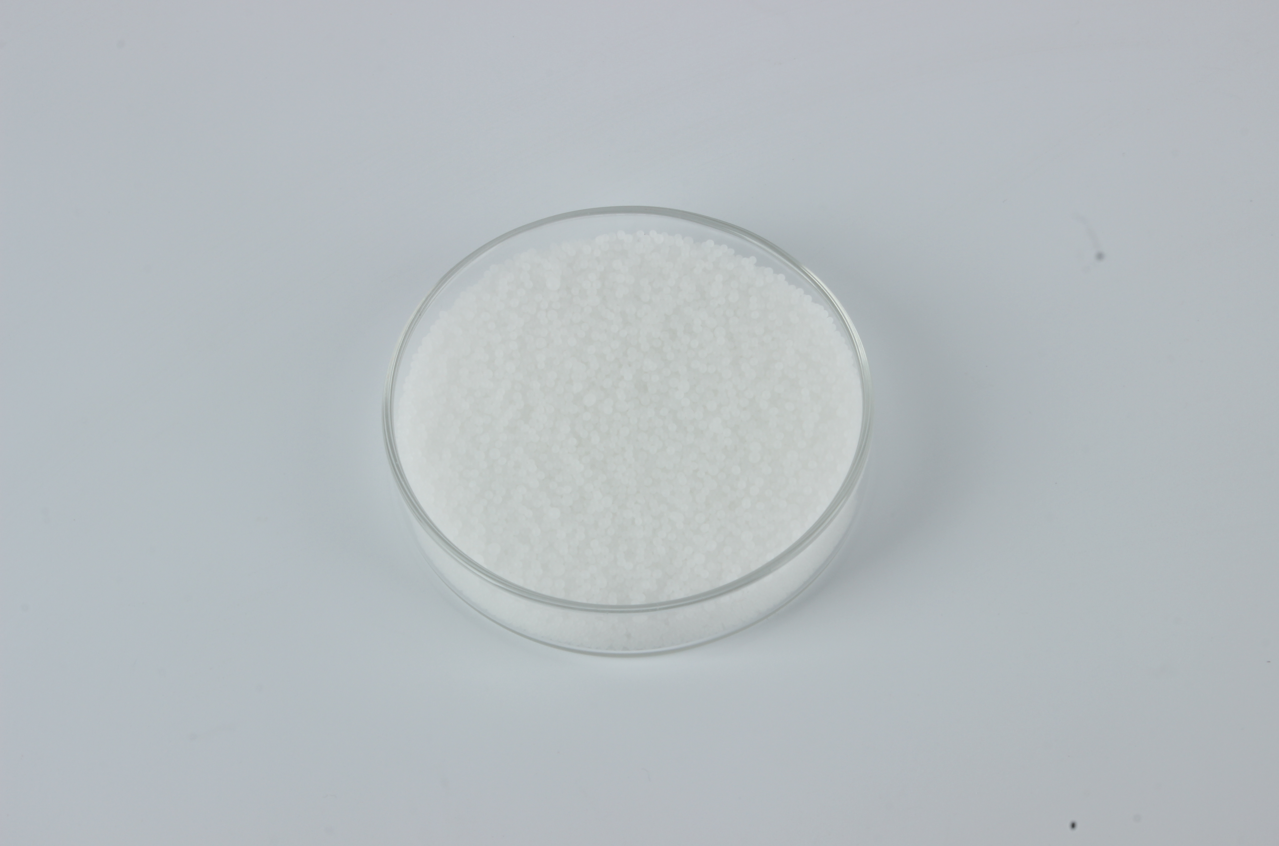
Introducing Oleamide Anti-Blocking Grade: Purpose-Built for Film Opening Performance
Film blocking is one of those production problems that shows up quietly and costs loudly. When plastic film layers cling together during winding, stacking, or storage, the consequences run from slowed converting lines and damaged rolls to customer complaints about film that won't open cleanly on automated packaging equipment. Standard slip additives help, but not all amide-based plastic additives are formulated with film opening as the primary design objective.
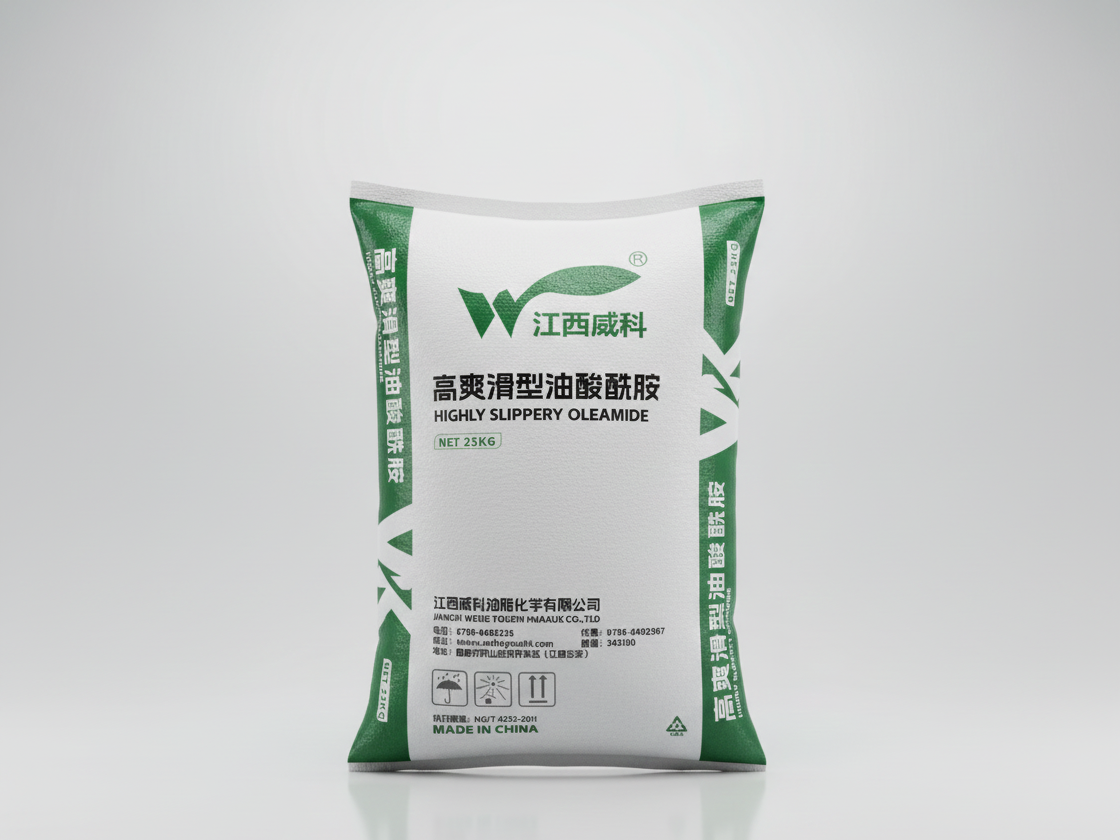
Topwellgoal is launching a dedicated product grade to address this directly: Oleamide — Anti-Blocking and Opening Agent Grade. This is not a repositioned standard oleamide. It is a purpose-formulated high-purity product engineered specifically for anti-blocking and film opening performance in LDPE, LLDPE, PP, and specialty packaging film applications.
What Makes This Grade Different from Standard Oleamide
The distinction starts at the formulation level. Standard oleamide grades are optimized for general slip performance across a range of polymer applications. The Anti-Blocking and Opening Agent Grade is formulated with film opening as the primary functional target, with tighter control over migration rate, active content, and particle characteristics to deliver faster, more uniform surface coverage in thin film systems.
The core mechanism is the same as all migratory plastic additives: after film processing, oleamide molecules migrate from the polymer interior to the surface, forming an extremely thin monolayer lubricating film. This surface layer physically isolates adjacent film layers, prevents polymer chain entanglement at contact interfaces, and reduces the adhesion forces responsible for blocking. What the Anti-Blocking Grade delivers is more controlled execution of that mechanism, consistent bloom behavior, predictable COF reduction, and reliable film opening performance from batch to batch.
Performance Characteristics Formulators Need to Know
High-purity grade additives in this category work at very low addition rates. Effective dosage for film applications typically falls between 500 and 2,000 ppm (0.05% to 0.2%), with blown film extrusion applications commonly running at 0.1% to 0.5% of total resin weight. At these concentrations, the Anti-Blocking Grade delivers meaningful COF reduction and reliable film opening without the surface contamination risks that come with overdosing.
Fast bloom is one of oleamide's defining characteristics relative to alternatives like erucamide, and it is particularly valuable in film applications where immediate anti-blocking performance is required after production rather than after a 24 to 48-hour bloom period. For operations running tight turnaround between film production and downstream converting or packaging, this rapid migration profile is a practical advantage, not just a specification detail.
Beyond anti-blocking and slip, this grade provides ancillary benefits that matter in packaging film: mild anti-static effect that reduces dust attraction during handling and storage, and improved surface gloss and smoothness in the finished film. Compatibility extends across PE, PP, EVA, and PVC resin systems, and the product carries FDA approval for food-contact material applications, supporting use in food packaging films without additional compliance burden.
Application Range and Dosage Guidance
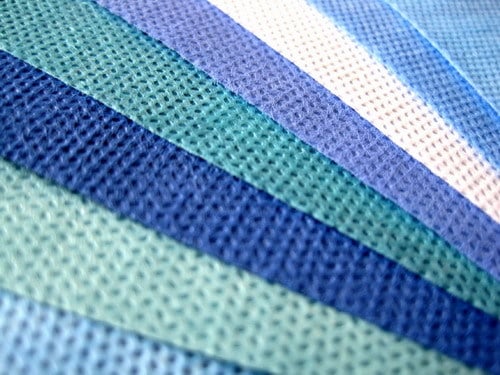
The Anti-Blocking and Opening Agent Grade is suited to general packaging films including LDPE, LLDPE, PP, and CPP, as well as specialty applications such as multilayer co-extruded films, bubble films, and ultra-thin film structures. It also functions as a bio-based additive lubricant and mold release agent in EVA, PA, and PET systems, and finds application in surface-printing inks where slip and scratch resistance are required.
Two formulation considerations are worth building into any trial: dosage precision and delivery method. Oleamide's migration rate means that overdosing creates downstream problems, excessive surface exudation can interfere with corona treatment effectiveness, reduce heat seal strength, and contribute to die build-up during extrusion. Topwellgoal recommends incorporating this grade via masterbatch to ensure uniform dispersion and accurate dosage control across the full film width. Small-scale trials to establish the optimal addition rate for your specific resin system and processing conditions are always advisable before full-scale production.
Storage discipline is also important. Oleamide is hygroscopic and prone to caking if exposed to moisture. Product should be stored in a cool, dry, sealed environment, and kept sealed until point of use to maintain the particle characteristics that support uniform masterbatch compounding.
Now Available from Topwellgoal
As a chemical manufacturer specializing in high-purity amide-based plastic additives, Topwellgoal's new Oleamide Anti-Blocking and Opening Agent Grade is available now for sampling and commercial supply to film manufacturers, masterbatch producers, and plastic additives distributors worldwide.
Contact Topwellgoal today to request product specifications, COA documentation, samples, or formulation support for your film application.