 Chinese
 Italian
 Spain
Spain French
 German
 Arabic
 Portugese
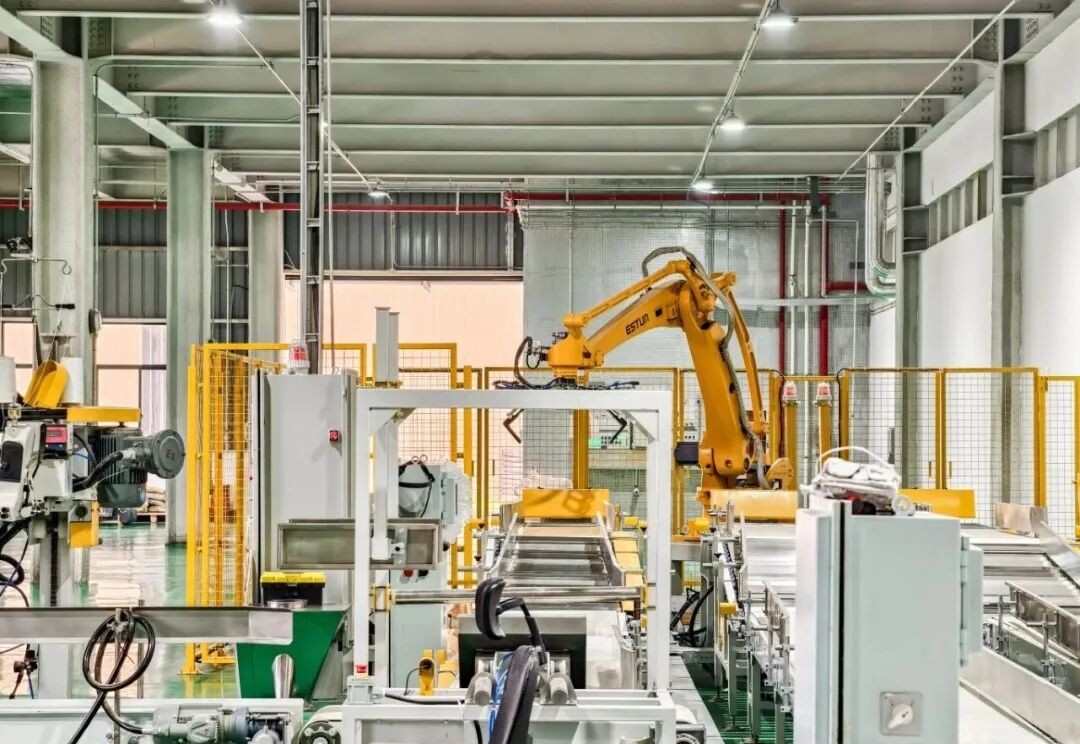
Inside Topwellgoal's New Fully-Automated Packaging Line
A chemical product's quality doesn't end at the reactor. It ends at the customer's receiving dock, and everything that happens between synthesis and delivery either protects that quality or compromises it. For manufacturers of plastic additives, the packaging line is where product consistency either holds or quietly falls apart.
Topwellgoal has completed a major upgrade to its packaging line, replacing manual operations with a fully automated system across weighing, sealing, and palletizing. The result is a step-change in throughput, consistency, and supply reliability,with direct implications for every customer receiving our oleochemical additives worldwide.
From 700 kg to 1.5 Tonnes Per Hour: What the Numbers Mean
The previous packaging line was capable of approximately 700 kilograms per hour a rate that increasingly became a constraint as Topwellgoal's production capacity expanded. The new automated system raises that ceiling to 1.5 tonnes per hour, equivalent to 60 packages completed every 60 minutes, one per minute, sustained continuously without the fatigue and variability that manual labor introduces at that pace.
At that throughput, manual weighing and stacking would impose an unsustainable physical burden on packaging workers. Automation removes that constraint entirely, freeing personnel for higher-value quality oversight roles while the line handles repetition with precision that human effort cannot consistently match at scale.
Precision That Protects Product Integrity
For oleochemical additives, where precise chemical composition is non-negotiable, packaging accuracy is not an operational detail, it is a product quality issue. The new line uses servo motors and high-resolution sensors to control fill volume, torque settings, and label placement to a degree of repeatability that manual processes cannot reliably deliver.
The downstream effect is measurable: reduced rejection rates, fewer instances of underfill or poor seals, and a consistent package presentation that reflects the manufacturing standard inside the bag. For plastic additives customers who formulate to precise dosage targets, receiving a correctly filled, properly sealed package is not a courtesy, it is a specification requirement. The upgraded packaging line treats it as one.
Every finished package also exits the line with airtight, tamper-evident sealing that protects moisture-sensitive and heat-sensitive oleochemical additives from ingress during storage and international transit. Advanced wrapping provides full waterproof and dustproof protection a practical necessity for products shipped across Southeast Asia, China, and into global markets where handling conditions vary significantly.
Safety, Compliance, and GHS Labeling Built Into the Process
Handling oleochemical additives at production scale involves materials that are heat-sensitive, and in some cases require careful worker protection protocols. The automated system eliminates direct human contact with high-temperature substances during the packaging stage, removing a primary source of workplace risk that manual operations carry inherently.
Regulatory compliance is enforced at the same point. The automatic labeling system ensures every package carries complete, accurate GHS (Globally Harmonized System) hazard information and handling instructions, applied consistently without the human error risk that manual labeling introduces. For a chemical manufacturer supplying regulated markets across Europe, Asia, and the Americas, label accuracy is not administrative housekeeping, a mislabeled shipment can trigger customs holds, compliance penalties, and customer relationship damage that far exceeds the cost of any individual order.
Standardized labeling across every package also means that downstream distributors and end-users receive consistent documentation, supporting their own compliance obligations without additional verification burden.
A Supply Chain Upgrade Your Procurement Team Will Notice
The combined effect of higher throughput, precision filling, automated sealing, and compliant labeling is a more reliable, more consistent supply of plastic additives, delivered in packaging that protects product integrity from the production floor to the point of use. For procurement managers and formulators who depend on batch-to-batch consistency in their oleochemical additives supply, these are not incremental improvements. They are structural upgrades to supply chain confidence.
Topwellgoal's investment in packaging line automation reflects the same manufacturing philosophy that drives our product development: precision, consistency, and the technical discipline required to operate as a market leader in specialty oleochemical additives for plastics, rubber, masterbatch, and beyond.
Contact Topwellgoal today to discuss product specifications, supply arrangements, or to request samples, and experience firsthand what a fully upgraded manufacturing and packaging operation delivers.