 Chinese
 Italian
 Spain
Spain French
 German
 Arabic
 Portugese
What Goes Into a Milk Tea Cup Before the Bubble Tea Does
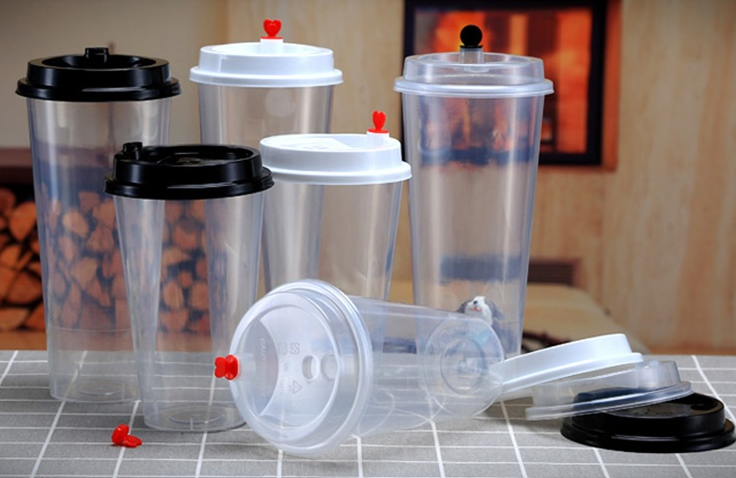
The milk tea cup market is booming across Asia and beyond, and behind every smooth, crystal-clear cup that holds a perfectly assembled drink is a manufacturing process that demands more from plastic additives than most consumers ever consider. Producing millions of food-contact cups with consistent clarity, smooth surfaces, reliable mold release, and print-ready finishes is not a given. It is an engineering outcome, and oleochemical additives play a more central role in achieving it than the finished product suggests.
Why Milk Tea Cup Production Is a Demanding Application
Plastic cups for milk tea and bubble tea are predominantly produced from PP and PET, materials that perform very differently in processing and place different demands on the additive system. PP cups are typically produced through injection molding at moderate temperatures, while PET cups require processing temperatures between 260°C and 285°C, putting immediate pressure on the thermal stability of every additive in the formulation.
Beyond temperature, milk tea cup manufacturers face a combination of requirements that must be met simultaneously: high optical clarity, low surface friction to prevent cups from sticking together in stacks, clean mold release at high production speeds, and a surface that accepts printing inks reliably after post-processing. No single additive addresses all of these. Getting the formulation right requires understanding which fatty acid amides do what, and at which stage of production they deliver their value.
Slip Agents: Surface Performance Starts at the Molecular Level
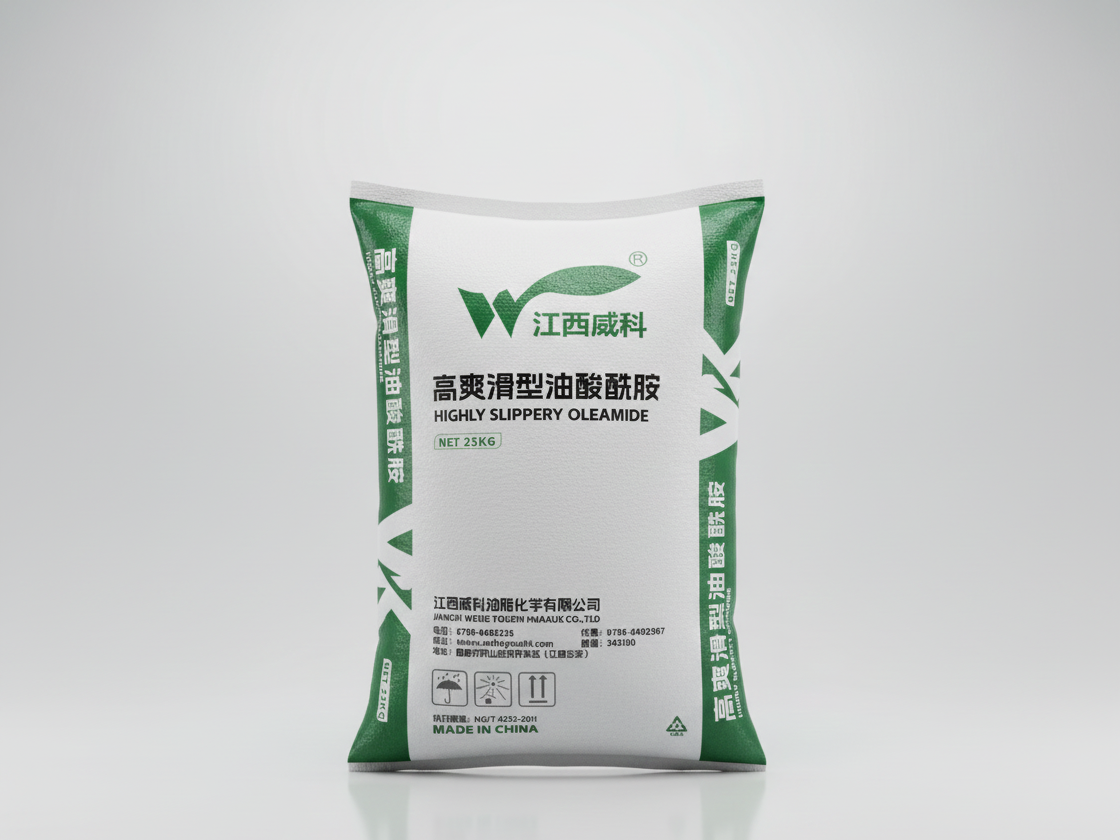
The most direct contribution of oleochemical additives in cup production comes from migratory slip agents, specifically oleamide and erucamide. Both function by blooming to the surface of the finished cup after molding, forming a microscopic lubricating layer that reduces the coefficient of friction (COF) and prevents cups from adhering to one another during stacking, packaging, and automated handling.
The difference between them matters at the process level. Oleamide is a fast-blooming slip agent, it migrates to the surface within hours, making it well suited to PP cup production where immediate anti-blocking performance is needed and processing temperatures stay within its thermal limit of approximately 230°C. Erucamide blooms more slowly, typically reaching full surface effect within 24 to 48 hours, but achieves a lower ultimate COF and withstands processing temperatures up to approximately 280°C. For PET milk tea cup production, where melt temperatures exceed what oleamide can reliably handle, erucamide is the technically correct choice. It also performs well in cups that undergo post-print oven baking, where thermal exposure after production would degrade a lower-stability additive.
Lubrication, Mold Release, and the Role of EBS
Not all functional demands in blow molding and injection molding are solved by surface migration. Inside the melt, friction between polymer chains increases viscosity and resists flow, a problem that surface-active slip agents do not address. This is where EBS (Ethylene Bis-Stearamide) adds value as both an internal and external lubricant.
As an internal lubricant, EBS reduces friction within the polymer melt, improving flow through complex mold geometries and contributing to faster, more consistent fill. As an external mold release agent, it creates a low-friction interface between the polymer and the mold surface, enabling cleaner ejection and reducing the cycle time drag that comes from sticking or partial adhesion. For branded plastic cups produced with colored pigments, a common requirement for milk tea chains with distinct visual identities, EBS adds a third function as a pigment dispersant, ensuring even color distribution throughout the cup wall without streaking or agglomeration.
Maintaining Clarity: Where Stearamide Adds Precision
For premium milk tea cups where optical transparency is a key product attribute, haze is the enemy. Erucamide alone can sometimes introduce slight surface haze as it blooms, particularly at higher concentrations. Stearamide, with its low-volatility and more subtle bloom behavior, is used as a synergist in these high-clarity formulations, contributing secondary slip and anti-block performance while helping preserve the ultra-high transparency that premium plastic cups require. It is also well suited to applications involving post-printing surface treatments, where a stable, non-interfering additive profile matters for treatment adhesion.
Formulate with Confidence
For milk tea cup manufacturers, compounders, and plastic additives distributors worldwide, the additive system inside the cup is not a secondary consideration, it is what makes the cup manufacturable at scale, printable after production, and consistent across millions of units. Getting that system right requires both the right product and a supplier with the technical depth to support formulation decisions.
Topwellgoal manufactures and supplies high-purity oleamide, erucamide, stearamide, EBS, and a full range of oleochemical additives for food-contact plastic applications, including cups, packaging, and consumer goods. All products are supported by full COA documentation and technical application guidance.
Contact Topwellgoal today to request product specifications, food-contact compliance documentation, or formulation support for your cup production line.