 Chinese
 Italian
 Spain
Spain French
 German
 Arabic
 Portugese
The Complete Guide to PBAT Additive Systems
The Complete Guide to PBAT Additive Systems
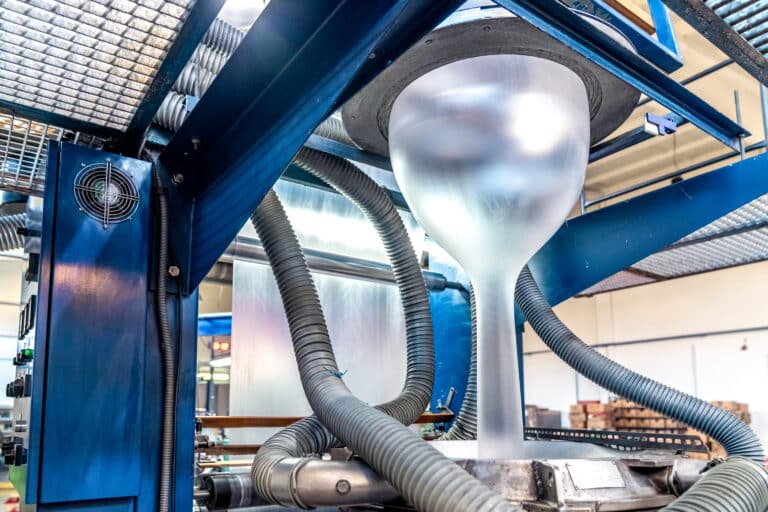
PBAT is the most widely adopted flexible substrate in biodegradable film production, and one of the most misunderstood from an additive formulation standpoint. The challenge is not getting PBAT to process. It processes readily within a moderate temperature window of 160°C to 200°C. The challenge is keeping the bubble stable during blown film extrusion, achieving compatibility in blends with PLA or other biopolymers, and delivering the surface performance that downstream converting and end-use applications demand. Each of those outcomes requires a different additive function, applied in a deliberate sequence.
This guide covers the complete PBAT additive system — what each category does, why the order of priority matters, and how formulation decisions interact with blown film process parameters.
Understanding What PBAT Actually Needs
Before selecting plastic additives, understanding PBAT's material characteristics defines the problem set. PBAT's chemical structure combines aliphatic ester segments, which provide biodegradability, with aromatic ester segments that contribute mechanical strength. The result is a polymer with exceptional elongation at break (500–800%), which means plasticizers are unnecessary, but film opening must be actively managed. The properties that create formulation challenges are melt strength, crystallization rate, thermal stability, and blend compatibility with PLA.
Low melt strength is the most critical constraint in blown film processing. Without intervention, PBAT's blow-up ratio (BUR) is typically limited to 2.5 or below, a ceiling that restricts film width, reduces production efficiency, and makes bubble stability sensitive to minor process fluctuations. Slow crystallization rate compounds the challenge: with a half-crystallization time exceeding 10 minutes, the film takes longer to develop sufficient rigidity after the frost line, affecting stripping speed and downstream handling. Moderate thermal stability within the processing window is manageable, but requires basic antioxidant protection to prevent degradation during residence time in the extruder. And when PBAT is blended with PLA, which it almost always is in commercial biodegradable film formulations, the incompatibility between the two phases creates a clear two-phase interface that must be bridged with a compatibilizer or the blend's mechanical properties will fall well short of what either component could deliver alone.
The Additive Sequence That Defines System Performance
PBAT additive system design follows a logical priority sequence, and departing from it creates downstream problems that are difficult to diagnose.
Chain extension comes first because melt strength is the foundation everything else depends on. Without adequate melt strength, bubble instability limits BUR, film gauge uniformity suffers, and the process window narrows to the point where other additive functions become difficult to optimize. PBAT's terminal hydroxyl and carboxyl groups (acid value approximately 10–30 mmol/kg) react effectively with epoxy-type chain extenders, making this a well-established and reactive system. Solving melt strength first is not optional, it is the prerequisite for stable blown film production.
Antioxidant protection is the second priority, providing the thermal stability baseline that protects the polymer and the chain extender from oxidative degradation during processing. The formulation window for PBAT is wider than for more thermally sensitive biopolymers like PHA, but antioxidant inclusion remains a non-negotiable baseline configuration rather than an optional enhancement.
Nucleating agents address the slow crystallization rate that limits stripping speed and film rigidity after the frost line. By accelerating crystallization kinetics, nucleating agents help the film develop handling rigidity earlier, improving throughput and reducing the sensitivity of downstream film handling to ambient temperature conditions.
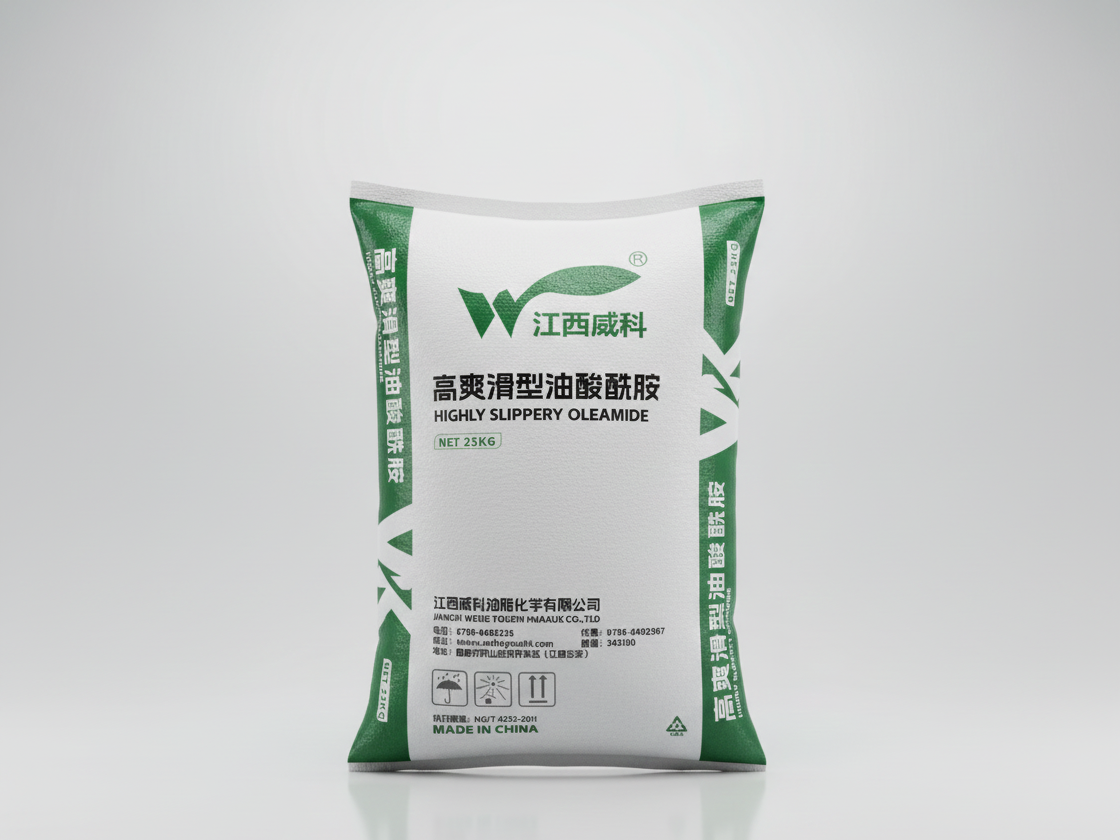
Opening agents and slip agents, where oleochemicals like erucamide and oleamide play their primary role, address surface processability. In PBAT and PBAT/PLA blown film, the film's high elongation and surface tack create blocking tendencies that standard polyolefin dosage levels may not adequately control. Erucamide is the standard choice for its thermal stability and controlled migration; oleamide suits applications where faster surface bloom is the priority. Dosage requires careful calibration in PBAT systems, the polymer's polarity and blend composition affect migration behavior relative to standard PE or PP film baselines.
Compatibilizer fills the final gap in blended systems. PBAT and PLA are thermodynamically immiscible, and without an interfacial agent to reduce phase separation and improve adhesion between the two polymer domains, the blend's mechanical performance, particularly elongation and impact resistance, will be significantly below what the formulation ratio would predict. Compatibilizer selection and loading are among the more application-specific decisions in PBAT formulation, requiring trial optimization against the specific PBAT/PLA ratio and processing conditions in use.
Formulating PBAT Blown Film That Actually Performs
The simplest framing of PBAT additive system design is this: the polymer provides the flexibility and the biodegradability. The additive system provides the processability, the blend integrity, and the surface performance. Neither works well without the other, and the additive sequence, chain extension, thermal protection, crystallization control, surface treatment, compatibilization, is not arbitrary. Each step enables the next.
For b2b manufacturers, compounders, and plastic additives distributors formulating PBAT or PBAT/PLA blown film systems, Topwellgoal supplies high-purity oleochemicals including erucamide and oleamide in grades specifically suited to biodegradable film applications, alongside technical support for dosage optimization, bloom rate calibration, and compatibility with other additive components in the system.
Contact Topwellgoal today to request product specifications, samples, or formulation guidance for your PBAT blown film additive system.