 Chinese
 Italian
 Spain
Spain French
 German
 Arabic
 Portugese
The Versatility of Amide-Based Additives Across Plastics Processing
Every plastic manufacturer working across multiple product lines eventually confronts the same sourcing question: how many different additives does the formulation actually need? For operations running film extrusion, injection molding, masterbatch production, and printing inks under the same roof, or supplying across those segments, the answer is often fewer than expected. Amide-based additives derived from fatty acid chemistry are among the most functionally versatile processing aids in the plastics industry, delivering meaningful performance contributions across seven distinct application categories from a single chemical family.
The underlying mechanism is consistent throughout: fatty acid amides migrate to the polymer surface to form a microscopic lubricating layer that reduces friction, modifies surface energy, and improves processing behavior. What changes across applications is which aspect of that mechanism is most valuable, and which specific amide type and dosage delivers it most effectively.
Masterbatch: Where Dispersion Efficiency Drives Color Performance
In masterbatch production, amide-based additives function primarily as dispersants and melt viscosity modifiers. Their ability to wet pigment particle surfaces, prevent re-agglomeration, and maximize color strength development makes them significantly more efficient than conventional wax-based dispersants at equivalent loading levels. Oleamide at 3% loading, for instance, can achieve melt viscosity reduction comparable to adding 8–15% polyethylene wax, a formulation efficiency that directly affects throughput and compound cost. For plastic manufacturers producing high-pigment-load masterbatches, this efficiency advantage is not marginal. It is structural.
Typical amide loading in masterbatch formulations varies considerably by pigment type and process design, with some patented formulations specifying content ranging from 2% to 35% by weight, reflecting the range of dispersion challenges that different pigment chemistries present.
Film Extrusion and Blow Molding: Slip, Anti-Block, and Optical Clarity
Film extrusion is the most established application for fatty acid amide processing aids, and the performance expectations are precise. Amide-based additives function as slip agents, opening agents, and anti-block agents simultaneously, reducing COF to enable smooth film movement over rollers and forming collars on high-speed packaging lines, preventing film layers from adhering during winding and storage, and doing both without the optical penalties that inorganic anti-block agents like silica introduce.
The efficiency at which these additives perform is notable: erucamide at under 250 ppm can reduce film COF to below 0.2, a performance threshold that defines runnability on demanding packaging lines. General film extrusion applications typically use addition rates of 300 to 750 ppm, with oleamide selected for rapid bloom where immediate slip effect is required, and erucamide favored for long-term COF stability and heat resistance in higher-temperature processing environments or applications requiring sustained performance through storage and distribution.
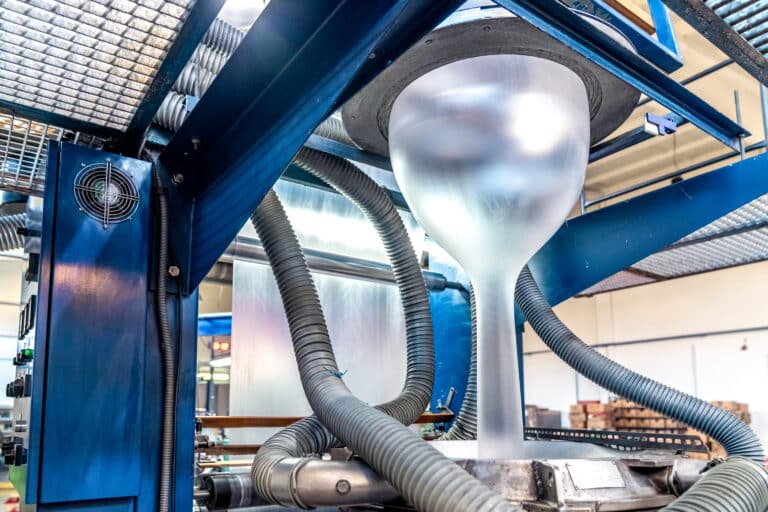
In blow molding, the same additive chemistry controls surface properties and prevents blocking between film layers, while maintaining the optical clarity that food packaging and consumer goods applications demand, an advantage that oleochemicals-based amides hold structurally over inorganic alternatives.
Injection Molding: Mold Release and Surface Quality at Production Speed
For injection molding applications, amide-based additives deliver value as internal mold release agents and surface quality enhancers. At very low addition rates, typically 0.1% to 0.15% for oleamide, they migrate to the interface between the molded part and the mold surface, reducing friction and enabling clean, consistent ejection without mechanical stress on the part or the tool.
The downstream benefits are measurable: smoother, glossier surfaces with fewer defects, reduced cycle times from more reliable demolding, and lower scrap rates across production runs. For high-volume plastic manufacturers where cycle time improvements compound across millions of shots annually, the productivity contribution of a well-formulated internal release system is significant relative to its cost in the formulation.
Printing Inks and Surface Treatments: Performance Beyond the Polymer
The application of amide-based additives in printing inks extends the chemistry's value well beyond polymer processing. In both solvent-based and water-based ink formulations, fatty acid amides improve pigment dispersion and leveling, prevent pigment settling during storage, and substantially increase the scratch and abrasion resistance of the dried ink film. Recommended at 1% to 2% of total ink formulation weight, they protect the printed layer against the scuffing and rubbing that flexible packaging encounters throughout its converting, filling, and distribution lifecycle.
This contribution to surface treatments and printed layer durability positions amide additives as functional components in the full value chain from polymer to finished package, not just in the compounding or film production stage.
Non-Woven Fiber: Precision Lubrication at the Fiber Scale
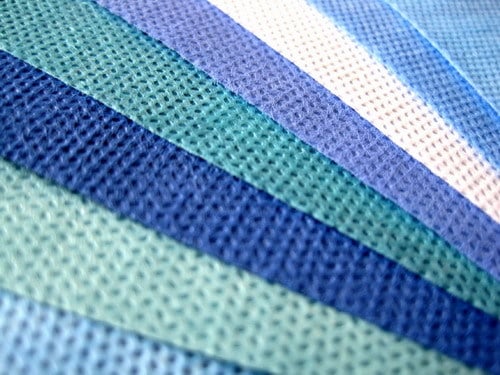
In spunbond and meltblown non-woven production, amide-based additives operate under the most demanding conditions in the fatty acid amide application landscape. Processing temperatures above 240°C, filament diameters in the 1 to 3 denier range, and strict odor and contamination requirements for hygiene and medical end-uses all narrow the selection to high-purity erucamide as the standard choice. Added at 0.05% to 1% by weight via masterbatch, erucamide reduces fiber-to-metal and fiber-to-fiber friction, targets a finished fiber COF in the 0.1 to 0.4 range, and improves spinning line uniformity, typically requiring an aging or annealing step after production to allow full surface migration and optimal effectiveness.
Source Across the Full Application Range from One Technically Capable Supplier
For b2b chemical manufacturers, masterbatch producers, film converters, and distributors supplying amide-based additives across multiple end markets, sourcing from a supplier with deep application knowledge across all these categories, not just one or two, reduces the technical risk in specification, reformulation, and customer support.
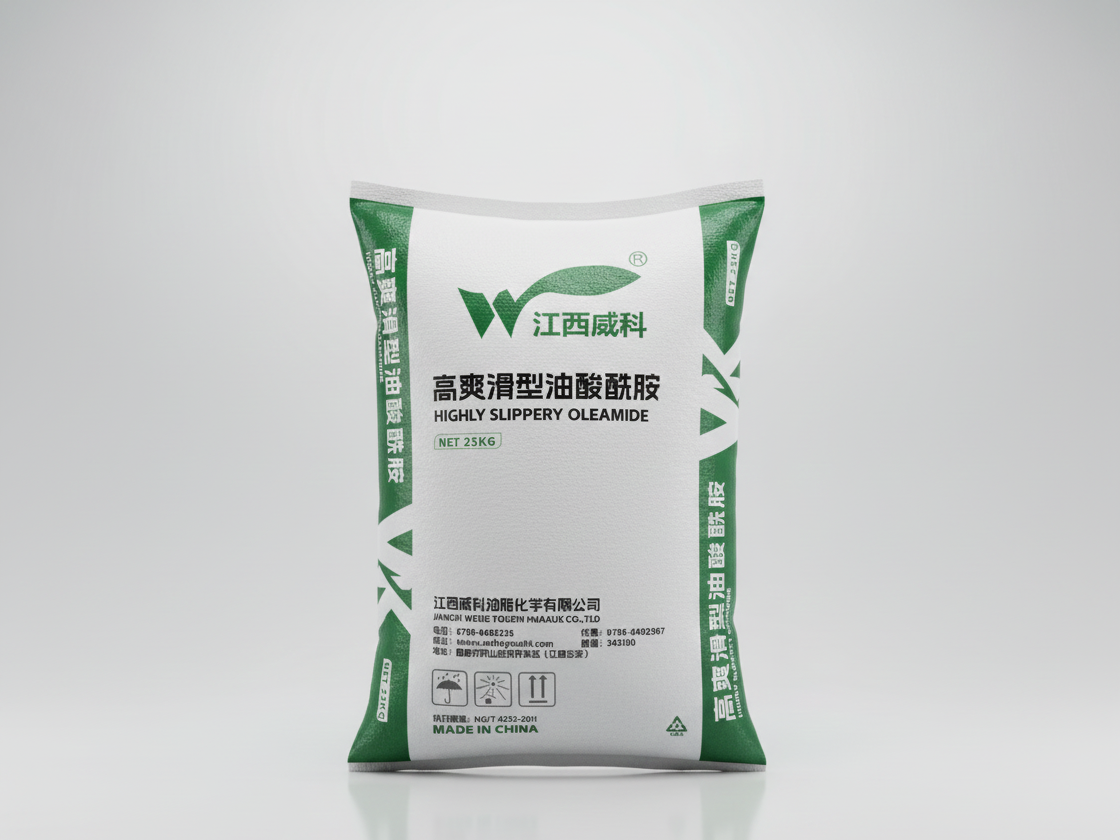
Topwellgoal manufactures and supplies high-purity oleamide, erucamide, stearamide, EBS, and a complete range of oleochemicals and amide-based processing aids to customers worldwide, with application expertise spanning masterbatch, film, molding, inks, and non-woven fiber production.
Contact Topwellgoal today to request product specifications, samples, or technical guidance matched to your specific application and processing requirements.