 Chinese
 Italian
 Spain
Spain French
 German
 Arabic
 Portugese
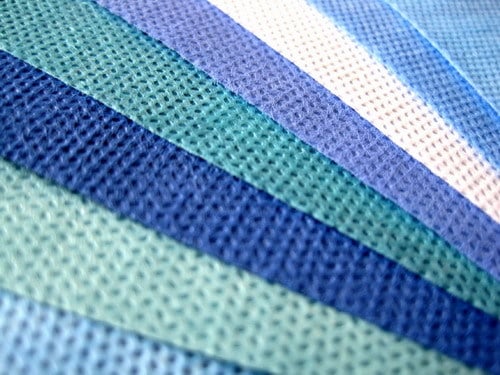
Why Non-Woven Fiber Production Demands a Different Additive Strategy
Non-woven fiber producers who assume that the same additive logic applying to injection-molded parts or packaging films will transfer to spunbond or meltblown production are solving the wrong problem. The application environment is fundamentally different, high-surface-area porous webs, spinning temperatures above 240°C, filament diameters in the 1 to 3 denier range, and end-use requirements that can range from water-repellent surgical gowns to moisture-wicking diaper topsheets. In this context, amide-based additives are not bulk lubricants. They are precision surface modifiers, and selecting the wrong type creates production problems that no process adjustment can fully compensate for.
What Amide-Based Additives Actually Do in Non-Woven Systems
The functions that amide-based additives perform in non-woven fiber production cover more ground than in most other plastic applications. As spinning lubricants, they reduce friction between extruded filaments and the godet rolls, guide rails, and winders that handle the fiber at high speed, preventing filament breakage, reducing static electricity buildup, and enabling higher take-up speeds that are critical for productive spunbond lines.
As anti-static agents, they reduce surface resistivity on the lightweight web, preventing fibers from clinging to rollers or to each other due to electrostatic attraction, a problem that causes web unevenness and disrupts the uniformity that hygiene and medical applications require. In carding and air-lay processes, the same processing aids reduce fiber-to-fiber cohesion, improving web homogeneity and draftability at the forming stage.
The softness and hand-feel contribution is particularly relevant for hygiene product manufacturers. Migrating amides impart a smoother, less harsh surface texture to the finished non-woven, a performance dimension that directly affects consumer perception in diapers, wipes, and medical gowns where skin contact is the end-use condition.
Erucamide vs. Oleamide: Why the Spunbond Environment Changes the Selection
For most film and molding applications, the choice between erucamide and oleamide comes down to bloom speed and thermal stability. In non-woven fiber production, the same distinction becomes more consequential because the processing conditions are more demanding and the consequences of the wrong choice are more immediate.
Spunbond PP lines operate at melt temperatures between 220°C and 260°C, conditions that push oleamide toward its thermal limits. At temperatures above 240°C, oleamide can volatilize, generate odor from aldehyde degradation byproducts, and yellow, all unacceptable in medical and hygiene fiber applications. Erucamide's lower volatility and higher thermal ceiling make it the standard choice for spunbond hygiene and medical non-wovens, where it delivers durable, non-greasy slip that persists through downstream converting without off-gassing.
Oleamide remains appropriate for lower-temperature processes, soft carded PE/PP blends for wipes, for instance, where its rapid surface migration is an advantage and processing temperatures stay within its stable operating range. The selection logic is not about which additive is better in isolation, but which one matches the thermal profile and end-use requirements of the specific line.
EBS and stearamide require particular caution in non-woven applications. EBS tends to form larger surface crystals that create visible white spots and dusting on fiber surfaces, a critical defect in clean-room medical environments and a quality failure in hygiene products. Stearamide's slower bloom makes it a secondary lubricant at best, typically blended with erucamide to balance performance rather than used as a primary processing aid.
The Plate-Out Problem and Why Purity Determines Line Uptime
Plate-out, the condensation of volatile additive components on the spinneret die face, is the single most disruptive production problem in non-woven fiber manufacturing involving amide-based additives. When additive volatility exceeds what the process can manage, deposits accumulate at the die, causing filament breakage and requiring production stoppages for cleaning. In high-throughput spunbond operations, unplanned downtime for die cleaning directly translates into lost output and increased scrap.
The solution is not simply choosing erucamide over oleamide, it is sourcing high-purity erucamide with a consistent, well-characterized volatility profile. Lower-purity grades carry impurities that volatilize more readily than the primary amide, increasing plate-out risk even when the primary additive type is correctly specified. For medical mask and hygiene product applications, purity also determines odor performance: off-gassing from impurity degradation is categorically unacceptable in products with skin or respiratory contact.
Dosage discipline reinforces both outcomes. Effective addition rates for amide-based additives in non-woven fiber systems fall between 0.1% and 0.5%, a narrower window than most other polymer applications. Above 0.6%, the risk of thermal bonding interference increases significantly: the lubricating surface layer reduces the heat transfer efficiency needed for fiber-to-fiber melt bonding during calendering, lowering tensile strength in the finished web. Addition via a 10–20% masterbatch in a compatible PP or PE carrier is the standard method, neat powder addition at these low levels does not disperse uniformly and creates the same inconsistency problems that purity failures introduce from the supply side.
Partner with a Supplier Who Understands Non-Woven Requirements
For non-woven fiber producers, masterbatch manufacturers, and b2b manufacturers of hygiene, medical, and industrial fiber products, additive selection and supply consistency are inseparable from production reliability. Topwellgoal supplies high-purity erucamide, oleamide, and a complete range of oleochemicals and amide-based additives formulated to meet the demanding requirements of non-woven fiber applications, with full COA documentation, low-odor grade options, and technical surface treatments support for spunbond, meltblown, and carded process environments.
Contact Topwellgoal today to request product specifications, purity documentation, or application guidance for your non-woven fiber production line.