 Chinese
 Italian
 Spain
Spain French
 German
 Arabic
 Portugese
Oleamide Applications: From Packaging Films to Industrial Lubricants
Most plastic additives solve one problem in one application. Oleamide is the exception. A fast-migrating fatty acid amide derived from oleic acid, oleamide functions as a slip agent, lubricant, anti-blocking agent, dispersant, anti-static agent, and surface modifier, across an application range that spans packaging films, printing inks, powder coatings, sealing materials, and industrial lubricants. For formulators and distributors evaluating where a single additive can deliver the most value across a product line, oleamide's versatility makes it worth understanding in depth.
Packaging Films: Where Oleamide Delivers Its Most Direct Value
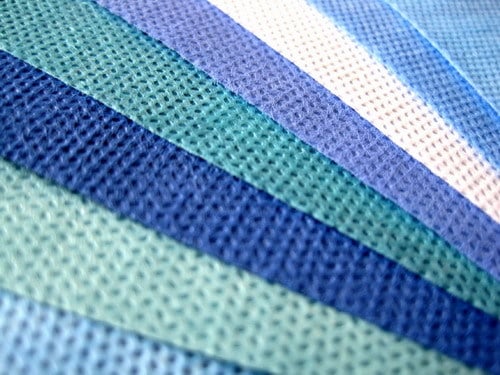
The largest and most established application for oleamide is in plastic packaging films, and the breadth within that category is significant. Food containers, agricultural films, liquid packaging for milk and soy milk, shopping bags, degradable films, fruit net sleeves made from foamed polyethylene, PP corrugated foam films, breathable films, and barrier sheets all benefit from oleamide's surface migration behavior.
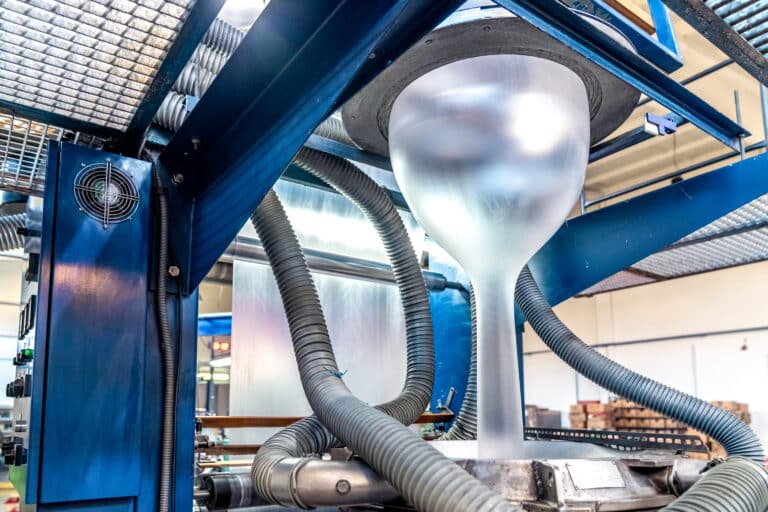
The mechanism is well established: oleamide disperses through the polymer melt during processing, then migrates to the film surface after forming, creating a thin lubricating monolayer that rapidly reduces dynamic and static friction coefficients to 0.2 or below. This COF reduction directly improves film runnability on high-speed converting and packaging equipment, reduces static electricity buildup that causes handling hazards and dust attraction during automated operations, prevents film layers from adhering to one another during winding and storage, and improves the surface smoothness and tactile feel of the finished product.
For biodegradable film producers working with PBAT and PLA blends, a rapidly growing segment, oleamide serves as an effective opening agent and processing aid, addressing the surface tack and blocking tendencies that these polar polymer systems are prone to generating at commercial film thicknesses.
Printing Inks and Coatings: Surface Performance Beyond the Film
Oleamide as a functional additive in plastic surface printing inks is a less commonly discussed but well-documented application. Added to ink formulations, it improves the slip feel of the printed surface, increases scratch resistance, reduces ink-to-ink and ink-to-substrate stickiness during printing and converting, and enhances pigment dispersibility within the ink system. These properties matter in high-speed flexographic and gravure printing operations where surface friction and ink transfer consistency directly affect print quality and press uptime.
In polyethylene thermoplastic powder coatings, oleamide contributes meaningfully to flow behavior and surface smoothness. Its internal lubricating effect reduces inter-particle friction during melt flow, promoting more uniform surface leveling and a smoother final finish, a practical benefit in architectural and industrial powder coating applications where surface aesthetics are part of the specification.
As a lubricant and dispersant in aluminum coatings, oleamide provides multiple functions simultaneously: improving coating flow, acting as a brightener for metallic appearance, and contributing metal anti-corrosion protection through its surface-active chemistry. This positions it as a multifunctional component in specialty coating formulations rather than a single-purpose additive.
Sealing Materials, Masterbatches, and Specialty Compounds
For sealing material manufacturers, producing gaskets, washers, bottle caps, and sealing strips, oleamide functions as both a processing lubricant and a surface conditioning agent that improves the smoothness and appearance of the finished component. In masterbatch production, it serves as a brightening and smoothing agent that enhances the surface quality of color and functional concentrates, improving dispersion uniformity and the aesthetic consistency of the final compound.
In PVC artificial leather and polyurethane surface treatment applications, oleamide provides a lubricating surface feel without altering the material's base mechanical properties, a valued function in consumer goods and automotive interior applications where surface tactile quality is a key performance parameter.
Across polyethylene composite boards, rubber and PP blends, and communication cable materials, oleamide functions as a dispersant and slip agent that improves processability and surface quality in compounding operations. Its compatibility with PE, PP, EVA, GPPS, wood-plastic composites, and biodegradable systems reflects the breadth of polymer systems where oleochemicals of this type add consistent value.
Industrial Lubricants: Oleamide Beyond Plastics
One of oleamide's less expected applications is as a friction modifier in lubricating oils, where it improves the compatibility between the oil phase and metal surfaces in crankcase and engine oil formulations. This boundary lubrication function, reducing metal-to-metal contact friction at the oil-metal interface, reflects oleamide's fundamental surface chemistry operating in a non-polymer context. For industrial lubricant formulators, it represents a bio-based alternative to some conventional friction modifier chemistries.
Source Oleamide from a Technically Capable Supplier
For b2b manufacturers, compounders, ink formulators, and plastic additives distributors worldwide, the consistency of oleamide supply, in terms of purity, active content, and migration behavior, determines how reliably these application benefits translate into production outcomes. Topwellgoal manufactures high-purity oleamide and a complete range of fatty acid amide additives under strict quality control systems, with full COA documentation and technical application support across all major end-use categories.
Contact Topwellgoal today to request product specifications, samples, or formulation guidance for your oleamide application.