 Chinese
 Italian
 Spain
Spain French
 German
 Arabic
 Portugese

Why Your Pen Cases Feel That Good: The Role of Fatty Acid Amides
Consumers judge a pen within seconds of picking it up. The smoothness of the surface, the quality of the finish, how cleanly the cap clicks, these tactile details shape perceived quality before the pen ever touches paper. Behind them lies deliberate material engineering, and one of the most important contributors is a class of oleochemical additives called fatty acid amides.
From budget stationery to premium branded pens, manufacturers across the plastics industry increasingly rely on fatty acid amides to improve processing efficiency, surface quality, scratch resistance, and production consistency. Understanding how these additives work, and which ones to use, gives formulators a meaningful edge in a competitive, high-volume manufacturing environment.
What Are Fatty Acid Amides and How Do They Work?
Fatty acid amides are bio-based plastic additives derived from renewable vegetable oils. In pen case production, they are incorporated into thermoplastics such as polypropylene (PP), polyethylene (PE), and ABS, the materials used for pen bodies, caps, clips, and outer casings, where they function as slip agents, lubricants, mold release agents, and processing aids.
Their effectiveness stems from a mechanism called surface blooming. During injection molding, the additive disperses uniformly through the polymer melt. As the plastic cools and solidifies, fatty acid amide molecules gradually migrate toward the surface, forming an ultra-thin lubricating layer that reduces friction, improves tactile feel, and enhances surface appearance. Though invisible to the naked eye, this microscopic layer has a measurable impact on how a finished pen feels, performs, and holds up over time.
Improving Injection Molding Efficiency
For pen manufacturers running high-volume operations, processing efficiency is as important as aesthetics. As internal lubricants, fatty acid amides reduce friction between polymer chains in the melt phase, allowing plastic to flow more smoothly through complex mold geometries. This translates to better filling of thin-wall designs, lower injection pressure requirements, reduced flow marks and molding defects, and improved dimensional consistency across production batches.
The mold release function is equally valuable. Without adequate lubrication, parts can stick to mold surfaces, causing deformation, production delays, and accelerated mold wear. Fatty acid amides create a low-friction interface between the molded part and the metal mold, enabling easier ejection, shorter cycle times, and reduced maintenance downtime. At production scales of millions of units, these process gains compound into significant cost and efficiency advantages.
Surface Quality, Scratch Resistance, and Gloss
A pen's surface finish is a direct signal of product quality to the end consumer. Fatty acid amides improve surface quality by promoting uniform polymer flow during molding and maintaining a lubricated surface layer after demolding. The result is improved gloss, smoother texture, reduced visible flow lines, and better overall appearance, particularly relevant for premium pens and branded promotional products where visual consistency is non-negotiable.
Oleamide, one of the most widely used slip agents in polyolefin applications, also contributes meaningfully to scratch resistance. The lubricating surface layer it forms helps minimize visible abrasion during handling, packaging, shipping, and daily use, preserving the pen's appearance well beyond the point of sale.
Color Consistency and Pigment Dispersion
Pen manufacturers typically offer products across a broad color range. Achieving consistent, vibrant coloration at scale requires uniform pigment distribution throughout the polymer matrix, and this is where certain fatty acid amides add a secondary function. Acting as dispersants during compounding and molding, they help break up pigment agglomerates and promote even distribution, resulting in more consistent color across large production runs and fewer batch-to-batch variations.
A Bio-Based Advantage in a Sustainability-Conscious Supply Chain
Because fatty acid amides are derived from renewable vegetable oil feedstocks rather than petroleum, they offer manufacturers a practical way to reduce reliance on fossil-derived processing chemicals without sacrificing performance. As sustainability expectations tighten across global supply chains, from brand owners to end retailers, sourcing bio-based oleochemical additives is becoming a meaningful differentiator, not just an environmental preference.
Choose the Right Additive Partner
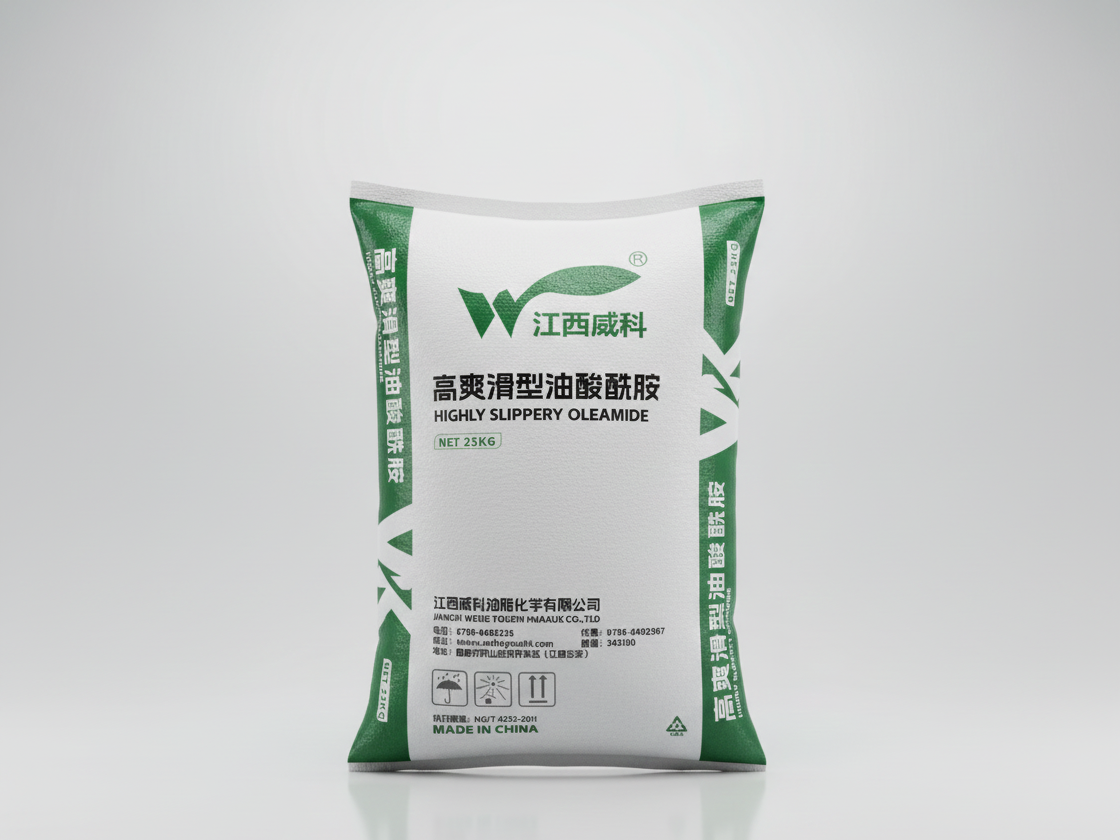
Whether you produce standard stationery components or premium pen casings, the right fatty acid amide formulation directly affects your processing efficiency, surface quality, and end-product consistency. Topwellgoal manufactures and supplies high-purity oleamide, erucamide, stearamide, and EBS to plastics manufacturers and distributors across Southeast Asia, China, and global markets, backed by technical support for application development and formulation optimization.
Contact Topwellgoal today to request product specifications, samples, or formulation guidance tailored to your pen case or plastic component production needs.